

IN THE SPOTLIGHT: INNOVATION USING TECHNOLOGY: ARCHITECTURAL/DRAFTING TECHNOLOGY PROGRAM
Welcome to Viking News’ In the Spotlight, a new Q&A series highlighting how Del Mar College departments, programs, and offices are using technology and innovation to enhance services, strengthen partnerships, and improve student success.
Each post “spotlights” a different author sharing – in their own words – how these advancements shape their work and benefit our Viking community.

PROGRAM REP: LAURA WRIGHT BIENEK, AIA,RID, NCARB, LEED AP
Program Director and Associate Professor of Architectural/Drafting Technology
Department of Computer Science, Engineering, and Advanced Technology, STEM Division
Q: How are advancements in technology and platforms changing how your area delivers services or instruction?
A: Advancement in technology is greatly enhancing how those of us practicing in Architecture deliver our services. Producing a complete set of Construction Documents is one of the primary duties of an architect. Developing the drawings and specifications for construction is a long, complex process. In the last few decades, the development of AutoCAD programs and then Building Information Modeling programs like Revit have greatly allowed the industry to produce those documents even faster. [These programs] also have allowed us to view how various building systems come together in the model in real time to lessen the number of errors and omissions and detect any issues with the convergence of these systems early on. The advancement of 3D modeling design tools such as Rhinoceros, Grasshopper, and Sketchup have allowed us to more easily model more complex, organic forms digitally and quickly advance the level of architectural design. Now, our imaginations are unhindered by our abilities to recreate in a 3D model what we can dream up. Today, advancements in AI technology are allowing us to speed up long arduous tasks and even help us to implement design scenarios and test them digitally before construction, which saves a lot of money by allowing us to explore new possibilities before it becomes brick and mortar structures.
Q: What is the most impactful innovation you’ve implemented, and what problem did it solve?
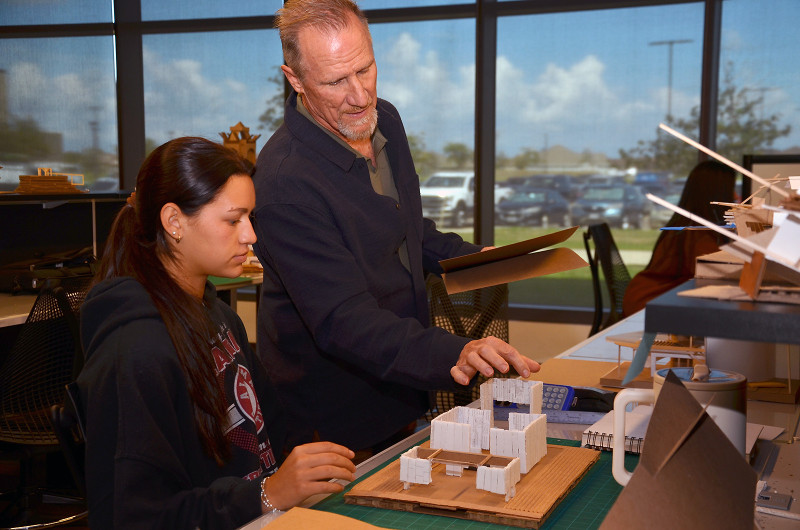
A: Architects can easily visualize a structure and the types of spaces we can create. Visualization of three-dimensional space or forms is not so easy for a layman such as a client or user of a building to see. So, advancement in technology such as animation software and VR (virtual reality) technology help us to show the client so they too can envision future space. We have begun implementing this technology in our programs to help students learn how to better communicate to their clients.
Q: How has this innovation improved student success?
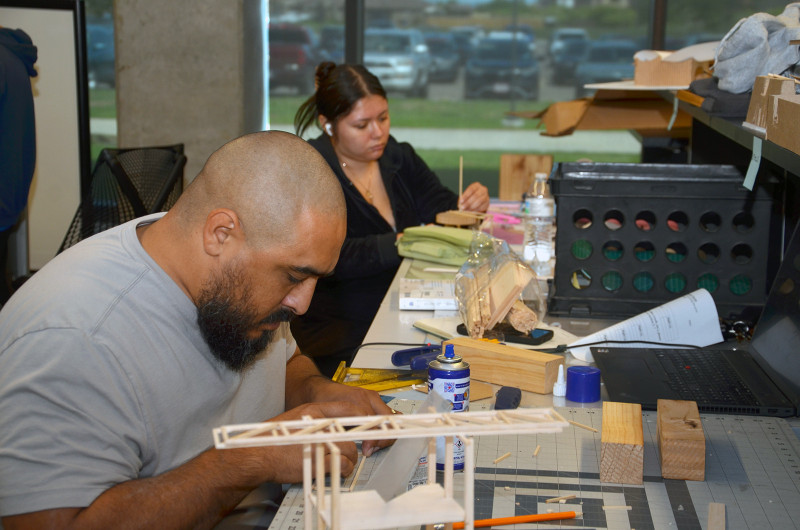
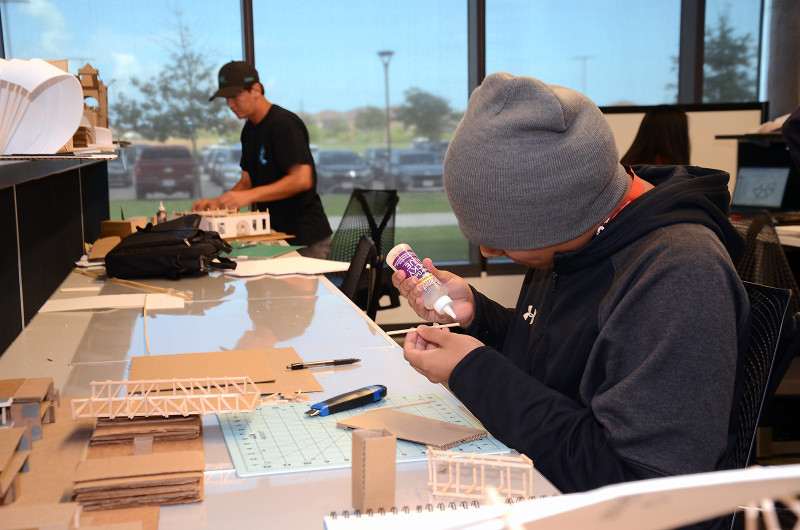
A: There are numerous tools we have at our disposal. We are trying to make as many of those tools available to the students as much as possible. These various digital tools have allowed students to realize their designs in many ways, using as many as needed to create the models, views and other forms of output to express their ideas. A good example is a student can develop free-flowing forms in Rhinoceros and then import the model into Revit to develop a formalized floor plan. The student can then import the digital model into Lumion and apply materials, lighting and people to set the scene for still images shown in magazines or fly through animations to make their designs appear more realistic. As students learn more about these tools, they can generate their final deliverables quicker and easier for final presentations.
Q: How has technology helped you build or strengthen partnerships with employers, schools, or other organizations, and how do these connections support the region’s workforce and economic growth?
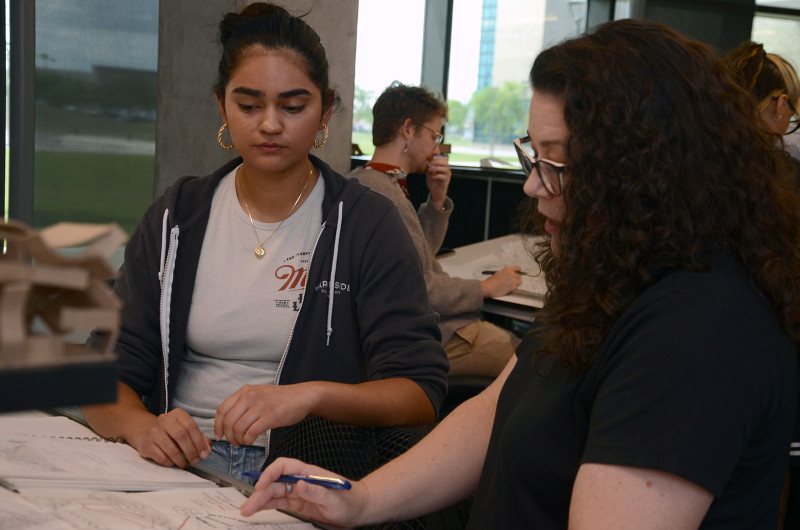
A: The Architectural/Drafting Technology program has a strong relationship with the local building industry. We surveyed all aspects of the industry to see what software local firms use predominantly so we could train students in all technology they would most likely encounter in the workforce. Our close partnerships with industry have kept open lines of communication so that we consistently garner feedback on what the latest industry trends and needs are. We strive to provide a fully trained workforce to meet those needs and then some, and we also have been training students on new technology to give them a leg up in the workforce to be more marketable with additional skills. Some of our students have been hired because they had skills in animation and rendering and/or 3D printing technology that firms may not have had. [Developing these skills among our students] has created a close, symbiotic relationship between academia and practice locally.
Q: Looking ahead, what advancements do you foresee impacting your area, and what new skills will DMC graduates need?
A: The building industry in South Texas is booming. Our students will be the future design and building professionals of this economy; and with the new Bachelor of Architecture partnership between Del Mar College and Texas A&M University-Corpus Christi, we look to build an Architecture school that focuses on innovation in construction technology, sustainability and resiliency. We’ll train strong project managers and leaders in the building industry, so we look to tighten the gap between school and practice by training students to collaborate between disciplines much like architects, engineers and contractors do in practice.
Q: If talking to a prospective student, what are the top benefits or opportunities you’d highlight about your program or service?
A: The Architectural/Drafting Technology Program has a strong connection with industry. We can help students prepare for the workforce and be a highly marketable asset to future employers. Also, with the new Bachelor of Architecture partnership between Del Mar College and Texas A&M University-Corpus Christi, we will be providing a seamless, turnkey pathway toward architecture licensure without having to leave the Coastal Bend.
Additional information:
Program Location: STEM Building, Oso Creek Campus, 7002 Yorktown Blvd., Corpus Christi, TX 78414
Web link: https://delmar.edu/degrees/architecture/index.html
Department phone: 361-698-1739
Email: lwright15@delmar.edu
Del Mar College empowers students to achieve their dreams. We offer quality programs, individual attention, outstanding instruction through faculty with real-world experience and affordable costs to credit and noncredit students in Corpus Christi and the South Texas Coastal Bend area. Nationally recognized while locally focused, we’re ranked in the top two percent of community colleges in the country granting associate degrees to Hispanic students (Community College Week). Del Mar College focuses on offering our students programs that match current or emerging career opportunities. Whether students are interested in the fine arts, sciences, business, occupational or technical areas, students get the education they need for the future they want at Del Mar College.
rn