

IN THE SPOTLIGHT: INNOVATION USING TECHNOLOGY: RADIO AND TELEVISION PROGRAM
Welcome to Viking News’ In the Spotlight, a Q&A series highlighting how Del Mar College departments, programs, and offices are using technology and innovation to enhance services, strengthen partnerships, and improve student success.
Each post “spotlights” a different author sharing – in their own words – how these advancements shape their work and benefit our Viking community.
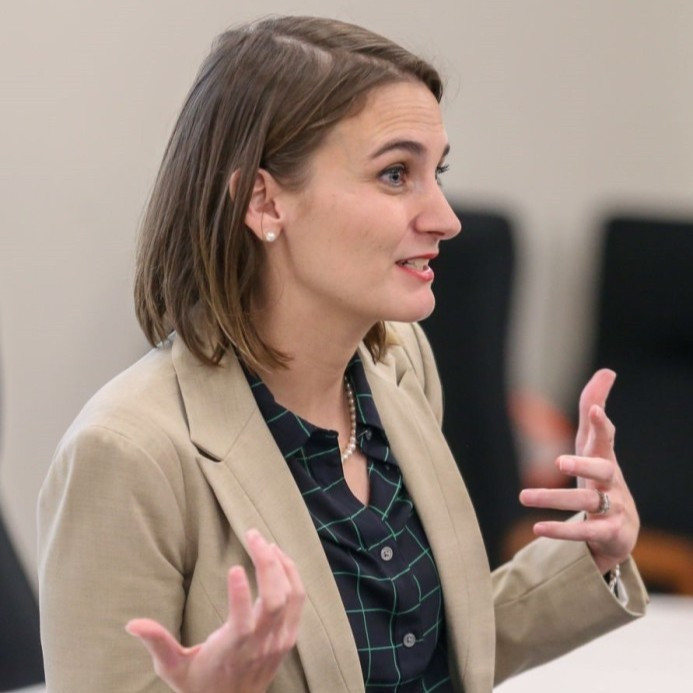
PROGRAM REPRESENTATIVE: RACHEL JENNISCHE, Ed.D.
Assistant Professor. Radio, Television and Digital Media
Department of Communications, Languages and Reading
Q: How are advancements in technology and platforms changing how your area delivers services or instruction?
A: The leap from analog to digital technology has really improved access in the media industry overall. What once took hundreds of thousands of dollars in machines can now be done with a phone. Because technology now changes so quickly, we must be constantly ready to adapt to the latest industry standard. The basics of good ethical and impactful storytelling, steady shots and engaging visuals are still there – but how they are captured changes.
Q: What is the most impactful innovation you’ve implemented, and what problem did it solve?
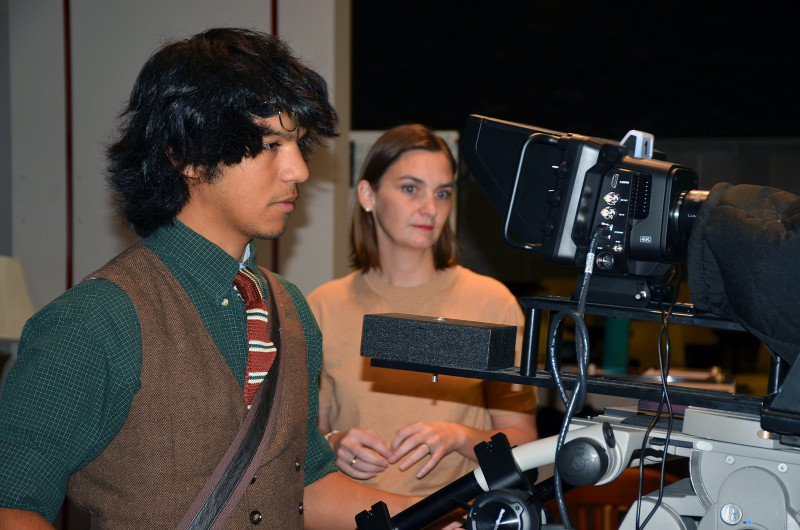
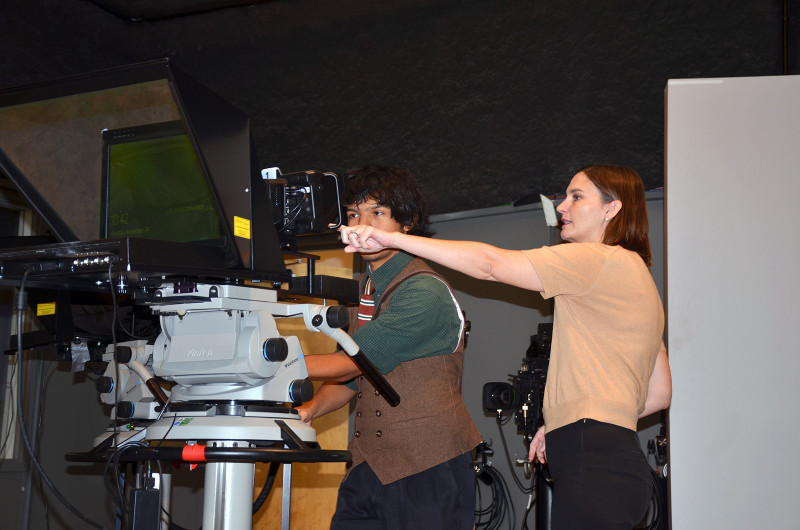
A: Just a few years ago, this program was still primarily running analog technology. Students were utilizing VHS tapes in classes but didn’t use that at home or in the industry. Thanks to some great people at the DMC Foundation, community donations and the DMC Information Technology Department, students now have access to a fantastic computer lab, a podcasting studio and a digital broadcast control room. This was a game changer for the program.
Q: How has this innovation improved student success?
A: Students can truly emulate what it is like to work in the media field. Yes, they can use their phones for some basic projects – but to truly be professionals, they need access to professional tools. Local employers are excited that our students leave their classes as skilled editors, designers, cinematographers and writers. Their hands-on projects mirror the expectations of the media business and get them ready for university transfer and industry employment.
Q: How has technology helped you build or strengthen partnerships with employers, schools or other organizations, and how do these connections support the region’s workforce and economic growth?
A: Because our technology mirrors professional standards, I can say “yes” when exciting opportunities arise for our students. This fall, we partnered with the Coastal Bend Day of Giving and KIII to provide news stories about nonprofits in South Texas. Students learned about giving back and got to see their work featured on local network television. I am proud to say that our students played a small part in raising more than $4.5 million for the Coastal Bend. The students learned a lot from this experience and have a new line to put on their resumes.
Q: Looking ahead, what advancements do you foresee impacting your area, and what new skills will DMC graduates need?
A: AI is impacting creative industries faster and in different ways than anyone could have imagined. While it is easy to be dismissive and think it won’t impact us – that would be foolish. AI can generate video and graphics rapidly, but at this point, it doesn’t necessarily mean anyone wants to watch it in its original form. The 2025 Coca Cola holiday commercial utilized AI; their ad team had 100 people cull through more than 70,000 generated video clips before they could find something acceptable for use. While AI might be able to create, human oversight is still necessary to define what the audience wants to see… and to ensure hands and faces look normal. I think that AI will play a part in the creative process, but primarily, employers will still want the originality of human-created content that is reliably and consistently good. A lot of people who rely on AI spend a lot of time fixing AI content. We use AI as a tool in our creative process. We create the original footage, content and graphics, but we use AI to organize files and transcribe interviews. This is how most professional creators are using it. DMC students have access to the entire Adobe Creative Suite while they are Mass Communication students. This places their AI tools in their hands so that they learn how to use them while they are here to develop expectations about what is possible and what is ethical. As far as what digital technology comes next… I have no idea. But we will be ready for it when it happens!
Q: If talking to a prospective student, what are the top benefits or opportunities you’d highlight about your program or service?
A: I think our biggest benefits are the hands-on opportunities and technology available to students. If they need a camera – they can get one and take it home. If they need a computer – our lab is equipped for editing massive files. Their projects are utilized outside of the classroom in The Foghorn and with local media outlets. Their work regularly earns state and national recognition for storytelling and creativity. When our students graduate, they have a body of work that demonstrates they have learned what it takes to be successful in this industry.
We are constantly working with our employer and transfer partners to make sure students are ready to go on to a university with all their credits or enter the professional workforce. This is a unique degree that prepares students for whichever avenue they are ready to take.
Additional information
Program Location: Fine Arts Center, Heritage Campus, 101 Baldwin Blvd, Corpus Christi, TX 78404
Web link: delmar.edu/degrees/digital-media/index.html and delmar.edu/degrees/radio-and-television/index.html
Phone: (361) 698-1534
Email: rjennische@delmar.edu
Del Mar College empowers students to achieve their dreams. We offer quality programs, individual attention, outstanding instruction through faculty with real-world experience and affordable costs to credit and noncredit students in Corpus Christi and the South Texas Coastal Bend area. Nationally recognized while locally focused, we’re ranked in the top two percent of community colleges in the country granting associate degrees to Hispanic students (Community College Week). Del Mar College focuses on offering our students programs that match current or emerging career opportunities. Whether students are interested in the fine arts, sciences, business, occupational or technical areas, students get the education they need for the future they want at Del Mar College.
rn